Droppers and Pipettes, The Essential Guide to Precision Liquid Handling.

Droppers and Pipettes The Essential Guide to Precision Liquid Handling play a essential role When it comes to accuracy in the lab, the kitchen, or even your daily skincare routine, few tools are as fundamental as droppers and pipettes. Often overlooked, these small but mighty instruments are the backbone of precision. Whether you are a scientist measuring reagents, a hobbyist mixing essential oils, or a DIY enthusiast crafting the perfect vape juice, understanding the nuances of liquid handling is key to a successful outcome.

In this comprehensive guide, we will explore the different types of transferring tools, their specific uses, and how to choose the right one for your needs.
Understanding the Basics: What is the Difference?

While many people use the terms interchangeably, there is a technical distinction between a dropper and a pipette.

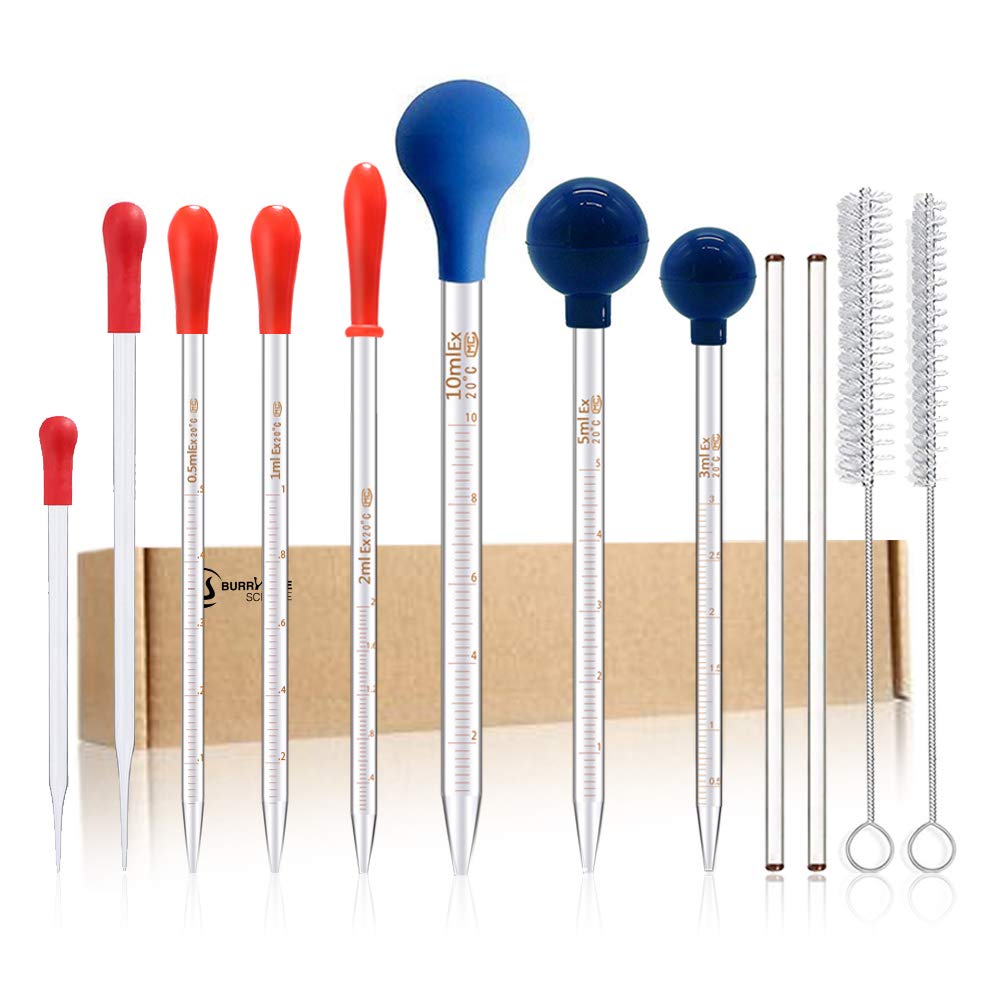
  • Droppers: Usually consisting of a glass or plastic tube with a rubber bulb at the top, droppers are designed for “approximate” measurements. They are perfect for tasks where a drop or two is enough, such as applying eye drops or adding food coloring to a recipe.
  • Pipettes: These are precision instruments used in scientific and medical settings. They are calibrated to deliver an exact volume of liquid, often down to the microliter.

The Main Types of Droppers and Pipettes

  1. Pasteur Pipettes (The Disposable Workhorse)

Often made of glass or plastic (frequently called transfer pipettes), these are the most common tools found in biology labs. The plastic versions are usually one-piece units with a built-in bulb. They are cheap, disposable, and excellent for moving liquid from one container to another without cross-contamination

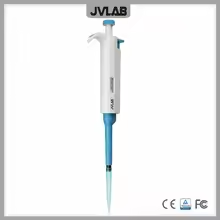
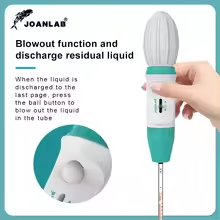
JOANLAB Pipette Large Volume Manual Pipette Pump Laboratory Micropipette Chemical Lab Equipment 0.1-100ml

2. Volumetric Pipettes (The Precision Expert)

  1. volumetric pipette, also known as a bulb or belly pipette, is a high-precision laboratory tool designed to measure and transfer a single, fixed volume of liquid. They are widely used in analytical chemistry for tasks like titration and preparing standard solutions because they can be accurate to four significant figures.

3. Micropipettes (The High-Tech Choice)

In modern molecular biology and chemistry, micropipettes are the gold standard. These are adjustable mechanical devices that use disposable plastic tips. They allow researchers to measure incredibly small amounts of liquid—as little as 0.1 microliters—with perfect repeatability.

4. Medicine Droppers (The Household Staple)

Usually found in the pharmacy aisle, the glass medicine dropper is a calibrated tool used to administer medication to children or pets. Their durability and ease of cleaning make them a favorite for home use.


Key Materials: Glass vs. Plastic

Choosing the right material for your liquid dispenser depends entirely on the chemicals you are handling.

  • Glass Droppers: Best for essential oils, perfumes, and strong acids. Glass is non-reactive and won’t leach chemicals into your liquids. They are also easy to sterilize and reuse.
  • Plastic Pipettes (LDPE/Polyethylene): These are ideal for aqueous solutions and non-corrosive liquids. They are break-resistant and perfect for teaching environments or “single-use” applications where cleaning is impractical.
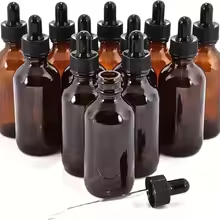
amber light proof glass essential oil bottle with glass dropper for essential oil sample cosmetics perfume travel

How to Use a Pipette Like a Pro

To avoid errors in your measurements, follow these professional tips:

  1. Vertical Alignment: Always hold the pipette or dropper vertically. Tilting it can cause the liquid to cling to the sides, leading to inaccurate volume delivery.
  2. Pre-wetting: Before taking your final measurement, draw the liquid up and expel it a few times. This equalizes the temperature and humidity inside the tip, preventing “weeping” or dripping.

The Meniscus Eye-Level: When reading a graduated glass pipette, always look at the bottom of the curve (the meniscus) at eye level to ensure an accurate reading

Common Applications Beyond the Lab

While we often associate droppers and pipettes with white lab coats, they are incredibly versatile in everyday life:

  • Aromatherapy: Precision is vital when blending essential oils to ensure the scent profile is balanced and skin-safe.
  • Art and Fluid Painting: Artists use plastic transfer pipettes to create “drip” effects or to mix ink colors with high control.
  • Aquarium Maintenance: Testing water pH or adding liquid fertilizer to a fish tank requires the exact dosing that only a pipette can provide.
  • Culinary Arts: Molecular gastronomy uses pipettes to create “balsamic pearls” or to infuse small amounts of flavor into delicate pastries.
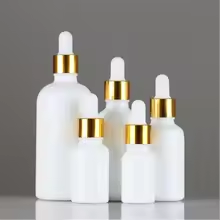
White Glass Dropper Bottles with Pipettes for Essential Oil Perfume Refillable Bottle

Maintenance and Safety

If you are using reusable glass droppers, hygiene is paramount. Always rinse them with distilled water or an appropriate solvent immediately after use. For medical or lab applications, autoclaving or using a 70% isopropyl alcohol soak is recommended to prevent bacterial growth.

Conclusion

From the simplest plastic dropper to the most advanced digital micropipette, these tools are the unsung heroes of accuracy. Choosing the right one ensures that your experiments stay valid, your recipes stay delicious, and your skincare routine stays effective.

Next time you reach for a bottle of serum or a chemistry set, take a moment to appreciate the humble dropper—the tool that brings precision to a world of flow.

Droppers and Pipettes, The Essential Guide to Precision Liquid Handling.

Leave a Comment

Your email address will not be published. Required fields are marked *

Scroll to Top