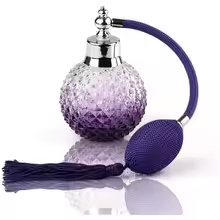
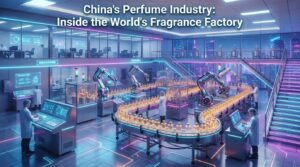
China’s Perfume Industry: Inside the World’s Fragrance Factory

The China perfume industry has grown from a minor regional player into one of the most influential forces shaping global fragrance manufacturing, raw material supply, and consumer demand. Once known mainly as a low-cost production base for Western fragrance brands, China is now a dual force in the scent world: a manufacturing powerhouse that supplies aroma chemicals, essential oils, and finished perfumes to the world, and a fast-growing consumer market where domestic brands are winning over a new generation of buyers. Understanding China’s role in the perfume industry today means looking at three overlapping stories: factories and ingredient supply chains, an expanding domestic market, and the cultural rise of homegrown Chinese fragrance houses.

Table of Contents

China as a Global Fragrance Manufacturing Hub.

China has long served as a critical manufacturing base for the global perfume supply chain. Industrial clusters in Guangzhou, Yiwu, and Zhejiang Province host thousands of OEM and ODM perfume factories that produce everything from private-label eau de parfum to bulk aroma chemicals for international fragrance houses. Yiwu, often called the “Global Capital of Small Commodities,” has become a major sourcing hub where manufacturers offer fast turnaround times, flexible minimum order quantities, and end-to-end services from formulation to packaging and export.

This manufacturing strength has attracted direct investment from some of the world’s largest fragrance and flavor companies, which have built production facilities in China to serve both local and export markets:

  • Givaudan formed a joint venture with Zhejiang Xinhua Chemical, one of Asia’s leading aroma chemical producers, to manufacture fragrance ingredients in China.
  • International Flavors & Fragrances (IFF) commissioned a large-scale fragrance ingredients plant in Jiande, Zhejiang Province, built to serve IFF’s global customer base.
  • Hundreds of Chinese-owned manufacturers, such as Zhejiang Rifeshow Cosmetics and Zuofun Cosmetics, now produce millions of bottles annually under private label and white-label arrangements, exporting to more than 100 countries.

This combination of local raw-material production and contract manufacturing makes China indispensable to the global fragrance supply chain, from mass-market body sprays to niche artisanal perfumes

The Rapid Growth of China's Domestic Perfume Market.

Beyond manufacturing, China has become one of the fastest-growing consumer perfume markets in the world. Industry estimates value the China perfume market at roughly USD 6.8 billion in 2025, with projections placing it near USD 9.6 billion by 2034. Other research houses report the market reaching approximately 25 billion yuan in 2024, with forecasts of more than 51 billion yuan by 2029, reflecting the “olfactory economy” boom driven by self-expression and emotional wellness trends among Chinese consumers.

A key driver of this growth is low market penetration relative to mature economies: fragrance penetration in China sits around 5%, compared with roughly 50% in the United States and Europe, leaving substantial room for expansion. Rising disposable income, a growing middle class, and changing attitudes toward personal luxury have pushed perfume from an occasional gift item toward an everyday self-care product, particularly among Gen Z and millennial consumers.

Social Commerce and the Xiaohongshu Douyin Effect.

Social media platforms such as Xiaohongshu (RED) and Douyin have become powerful engines of fragrance discovery in China. Short-form video reviews, scent-layering tutorials, and influencer recommendations drive purchase decisions in ways that traditional advertising cannot match. According to industry research, up to 70% of Chinese urban consumers now purchase fragrances through domestic online shopping platforms, ahead of physical brand counters and specialty stores. This online-first buying behavior has allowed niche and independent perfume brands to reach national audiences quickly, without the heavy retail investment that once favored only large international houses.

The Rise of Homegrown Chinese Perfume Brands.

Perhaps the most significant shift in China’s perfume story is cultural rather than industrial: the rise of domestic fragrance brands built around Chinese aesthetics, ingredients, and storytelling. A 2026 industry report jointly released by Tmall Beauty, TMIC, and Baqiu found that 56.3% of young Chinese consumers now choose fragrances based on personal preference rather than brand prestige, a figure that has risen more than 16 percentage points year-on-year. Domestic labels are increasingly competing in the premium segment, leveraging ingredients such as osmanthus, white tea, and traditional incense notes to create an “Oriental narrative” that differentiates them from Western heritage houses.

This trend reflects a broader pattern seen across Chinese consumer categories: local brands using cultural identity, faster product cycles, and social-media-native marketing to compete directly with established multinational names on their home turf

Challenges Facing China's Perfume Industry.

Despite strong momentum, several challenges remain for China’s perfume sector:

  • Low category familiarity: many first-time buyers are still learning fragrance families, concentrations, and longevity, which slows conversion compared with mature markets.
  • Counterfeit and gray-market products: rapid e-commerce growth has also created openings for imitation goods that can damage consumer trust.
  • Regulatory compliance: cosmetic and fragrance ingredient regulations in China require careful navigation for both domestic manufacturers and foreign brands entering the market.
  • Intense price competition: the crowded OEM/ODM manufacturing sector keeps margins thin for factories that compete mainly on cost rather than innovation.

Future Outlook for China's Perfume Industry.

Analysts broadly agree that China’s role in the global perfume industry will keep expanding on both fronts, as a manufacturing base and as a consumer market. Frost & Sullivan projects China’s broader cosmetics market to grow at a compound annual rate of roughly 6.19% through 2028, while fragrance-specific forecasts point to continued double-digit growth in the premium segment. As global fragrance houses deepen their manufacturing footprint in China and domestic brands mature creatively, China is positioned to become not just the world’s factory for perfume, but also one of its most important sources of fragrance innovation and cultural influence.

Where Empty Perfume Bottles Are Made in China.

China is also the world’s largest source of empty perfume bottles, the glass and packaging components that brands fill with their own fragrance. This packaging supply chain is separate from the aroma-chemical manufacturers discussed above and is concentrated in specific industrial clusters known for glass forming, molding, and decoration:

  • Xuzhou, Jiangsu Province – one of China’s largest hubs for glass perfume bottle production, known for high-volume manufacturing and export-ready factories.
  • Guangzhou, Guangdong Province – home to large packaging manufacturers that combine glass bottles with pumps, sprayers, and premium caps for cosmetics and fragrance brands.
  • Zhejiang Province (Pujiang County, Hangzhou) – a dense cluster of glass and glass-product factories that supply bottles, caps, and cosmetic packaging alongside the region’s finished-perfume manufacturers.

These factories offer OEM and ODM services, meaning a brand can either order standard stock bottle designs or commission fully custom shapes, glass thickness, colors, and cap finishes. Typical minimum order quantities range from around 3,000 to 10,000 pieces, though smaller trial orders are often possible through trading companies and sourcing agents.

How to Import Empty Perfume Bottles from China.

Importing empty perfume bottles from China generally follows a straightforward, repeatable process:

  • Find suppliers: search B2B platforms such as Alibaba, Made-in-China, Global Sources, and 1688, or work with a sourcing agent who has vetted factories in Xuzhou, Guangzhou, and Zhejiang.
  • Request samples: order physical samples to check glass thickness, clarity, cap and sprayer fit, and overall finish before committing to a bulk order.
  • Negotiate MOQ and customization: confirm minimum order quantity, mold or tooling costs for custom shapes, printing or engraving options, and unit pricing at different volumes.
  • Arrange quality control: use pre-production approval, inline inspection, and a final QC check before shipment, either through the factory or an independent third-party inspection service.
  • Choose shipping and Incoterms: glass bottles are heavy and fragile, so sea freight (FOB or CIF) is standard for bulk orders, while air freight suits small or urgent shipments; agree on packaging that prevents breakage in transit.
  • Handle customs clearance: confirm the correct HS code for glass packaging, prepare a commercial invoice and packing list, and check import duties, VAT, or cosmetic-packaging regulations in your destination country before the shipment arrives.

Working with a trading company or sourcing agent based in China can simplify this process for first-time importers, since they often consolidate orders from multiple factories, handle quality inspection locally, and negotiate freight on the buyer’s behalf.

Frequently Asked Questions About China's Perfume Industry.
Is China a major manufacturer of perfume?

Yes. China hosts thousands of OEM and ODM perfume factories, mainly in Guangzhou, Yiwu, and Zhejiang Province, and is home to fragrance ingredient plants built by global players such as Givaudan and IFF, making it a central hub in the global fragrance supply chain.

How big is China’s perfume market?

Estimates vary by research firm, but China’s perfume market was valued at roughly USD 6.8 billion in 2025 and is projected to reach approximately USD 9.6 billion by 2034, with some local reports estimating the market at 25 billion yuan in 2024, growing toward over 51 billion yuan by 2029.

Why is China’s perfume market growing so fast?

Growth is driven by low existing fragrance penetration (around 5% versus 50% in the US and Europe), rising disposable income, social-media-driven discovery on platforms like Xiaohongshu and Douyin, and growing interest in fragrance as a form of self-expression and emotional wellness among younger consumers.

Are Chinese perfume brands becoming popular?

Yes. Domestic Chinese fragrance brands are gaining significant market share, especially in the premium segment, by blending Chinese aesthetics and ingredients with modern packaging and social-media marketing. Industry data shows a majority of young consumers now choose fragrances based on personal preference rather than brand heritage alone.

Where are empty perfume bottles manufactured in China?

Most empty glass perfume bottles come from factories in Xuzhou (Jiangsu Province), Guangzhou (Guangdong Province), and Zhejiang Province, particularly around Pujiang County and Hangzhou, which specialize in glass forming, decoration, and cosmetic packaging.

How can I import perfume bottles from China?

Buyers typically source suppliers on platforms like Alibaba, Made-in-China, or Global Sources, order samples to check quality, agree on MOQ and pricing, arrange quality inspection before shipment, and ship in bulk by sea freight using standard Incoterms such as FOB or CIF.

Leave a Comment

Your email address will not be published. Required fields are marked *

Scroll to Top