
Glass Beakers for perfume, The Essential Tool for Crafting Professional Scents.
Glass Beakers for Perfume, The Essential Tool for Crafting Professional Scents. If you’ve ever ventured into the world of DIY perfumery, you know it’s a delicate balance between art and chemistry. While your nose guides the creative process, your equipment handles the precision. At the heart of every fragrance studio lies the glass beaker—a simple yet indispensable tool where the magic begins. Whether you’re a hobbyist experimenting with your first botanical blend or a professional perfumer developing a luxury line, the beaker is your foundation.
In this guide, we’ll uncover why borosilicate glass beakers are the industry standard, how to select the right sizes, and why accuracy in blending equipment is the secret to achieving consistent, high-quality perfumes.
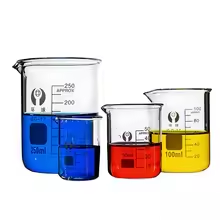
Why Choose Glass Beakers for Perfume?
You might be tempted to use plastic containers or standard kitchen glass, but professional perfumery demands a higher grade of material. Here is why laboratory-grade glass beakers are non-negotiable for scent creation:
- Non-Reactive Properties: Perfume involves high concentrations of alcohol and essential oils. Plastic can leach chemicals into your scent or absorb odors from previous batches. Glass is inert, ensuring your “Ocean Breeze” doesn’t end up smelling like yesterday’s “Spiced Sandalwood.”
- Heat Resistance: Many perfume-making processes—like melting beeswax for solid perfumes or gently warming resins—require heat. Borosilicate glass (like Pyrex) can handle rapid temperature changes without cracking or shattering.
Clarity for Visual Inspection: Achieving the perfect clarity in a perfume is essential. A clear glass beaker allows you to spot any cloudiness (flocculation) or undissolved particles instantly, which is vital for quality control in perfumery.
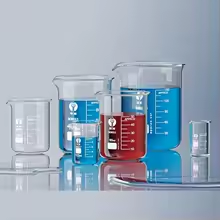
Selecting the Right Sizes for Your Lab
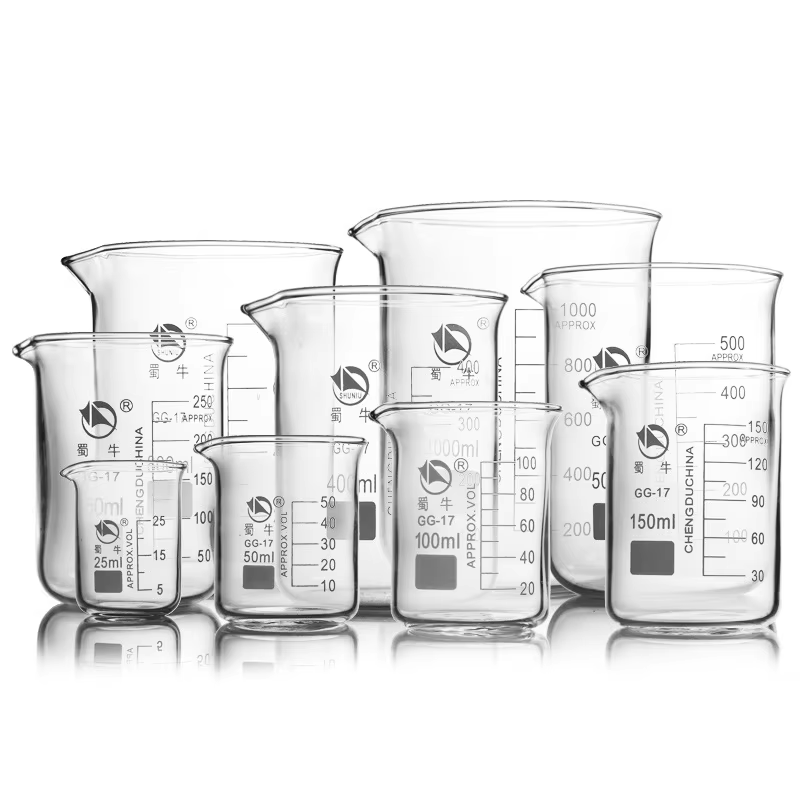
A well-equipped perfume making kit should include a variety of beaker sizes. In perfumery, we usually work with “Griffin beakers”—the low-form, wide-mouthed style that is stable on a workbench.
- 50ml to 100ml Beakers: Perfect for experimental “accords.” This is where you test small ratios of base, heart, and top notes before committing to a full bottle.
- 250ml to 500ml Beakers: Once your formula is locked in, these mid-sized containers are ideal for mixing your “master batch” before it is diluted with perfumer’s alcohol.
- 1000ml (1 Liter) Beakers: Used primarily for bulk production or for the “maceration” phase where the perfume sits to develop its full profile over several weeks.
The Role of Precision in Fragrance Blending.
While beakers have graduated markings on the side, a common pro-tip in the industry is to use your glass beaker for perfume in conjunction with a digital scale.
In professional perfumery, we measure by weight (grams), not volume (milliliters). This is because the volume of oils can change with temperature. The beaker provides the perfect, easy-pour vessel to sit on your scale, allowing for the precise measurement of essential oils and aroma chemicals. The “spout” or “beak” of the beaker is specifically designed for a drip-free pour, which is crucial when transferring expensive liquids into narrow-necked perfume bottles.
Essential Maintenance: How to Clean Your Beakers
Cross-contamination is the enemy of a great nose. If even a microscopic amount of a strong scent like Patchouli remains in your beaker, it will ruin your next light floral blend.
- The Alcohol Rinse: After finishing a batch, rinse the beaker with high-proof isopropyl alcohol or perfumer’s alcohol. This breaks down the oils that water can’t touch.
- The Deep Clean: Use an odorless laboratory detergent. Avoid flowery dish soaps, as their fragrance can “ghost” on the glass.
- Drying: Always air-dry your beakers upside down on a clean rack to prevent dust from settling inside.
Aesthetic vs. Function: The "Alchemist" Vibe
Beyond the science, there is an undeniable aesthetic appeal to using glass labware for perfume. There is something deeply satisfying and “alchemical” about watching amber-colored oils swirl into clear alcohol inside a sparkling glass beaker. For creators who film content for social media or host workshops, high-quality glassware adds a level of professionalism and a “vintage apothecary” aesthetic that plastic simply cannot match.
Where to Buy and What to Look For.
When shopping for a glass beaker for perfume, look for these specific features:
- Material: Must be Borosilicate 3.3 glass for durability.
- Graduations: Look for permanent, easy-to-read markings that won’t rub off after multiple alcohol washes.
- Design: Ensure it has a reinforced rim to prevent chipping and a well-defined pour spout for mess-free transfers.